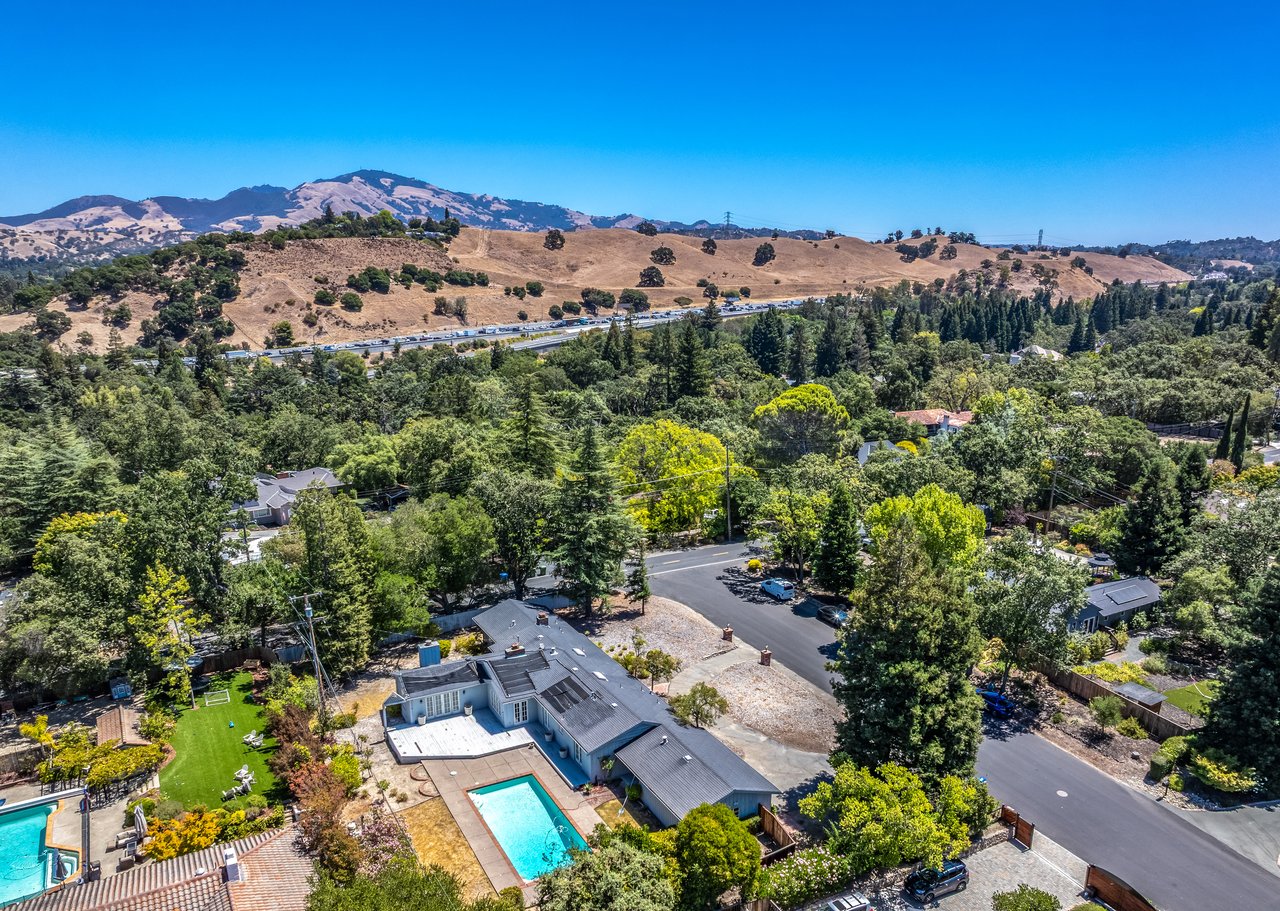
Who this is for: Buyers who have identified Alamo as their target market and are now trying to understand which specific neighborhood Westside, Roundhill, Stonegate, Bryan Ranch, White Gate, or a hillside pocket fits their daily life, budget, privacy priorities, and long-term resale plan; also for sellers currently owning in any Alamo neighborhood who want to understand how to position their home's specific pocket as a strength rather than just a generic "Alamo" address.
The decision you're trying to make: Not "which Alamo neighborhood has the best reputation"; they all have strong reputations among the buyers who choose them. The real decision is which combination of lifestyle priorities proximity and charm versus privacy and seclusion, country-club identity versus estate independence, walkability versus acreage matches how you actually want to live and what the next buyer will value when you eventually sell.
Why our team has authority: The Frazzano Tse Team has worked the Alamo, Danville, and Diablo Valley luxury market for over 50 years, with $2.7 billion in career sales. We know Westside Alamo at the street level, which lots deliver genuine privacy versus implied privacy, which Roundhill properties have the golf-course exposure that commands premiums versus the adjacency without the view, how Stonegate compares to Bryan Ranch for the same buyer, and what Alamo buyers consistently discover after closing that they wish they'd evaluated before writing the offer.
What you'll know by the end: What genuinely differentiates each major Alamo neighborhood, the specific evaluation framework for each pocket, the due-diligence priorities that vary by neighborhood, a clear decision framework for choosing between them, and what sellers in each pocket need to do differently to market their home's specific value rather than relying on the Alamo address to do the work.
Why Alamo Requires Neighborhood-Level Thinking
Alamo is an unincorporated Contra Costa County community, and that unincorporated character is part of its identity. It tends to feel quieter, more residential, and more estate-oriented than nearby incorporated cities. But it also means property details vary enormously in ways that don't affect standard suburban markets: sewer versus septic depending on location, well-versus-municipal water in some older estate properties, drainage complexity on hillside and larger lots, HOA presence or absence by neighborhood, and insurance considerations that vary by wildfire exposure and property configuration.
"Buying Alamo" is not one decision. A Westside Alamo property and a Bryan Ranch estate may both have Alamo mailing addresses and share the SRVUSD school district. Still, they serve completely different buyers, carry completely different maintenance profiles, and compete against entirely different comparable sets when you sell. The neighborhood gets you interested. The specific lot, condition, privacy, outdoor living, and price decide whether it's the right home.
1. Westside Alamo: Charm, Convenience, and Mature Character
Best fit for: Buyers who want Alamo's residential privacy and lot quality with proximity to Danville and downtown Alamo amenities the rare combination of established character and daily convenience.
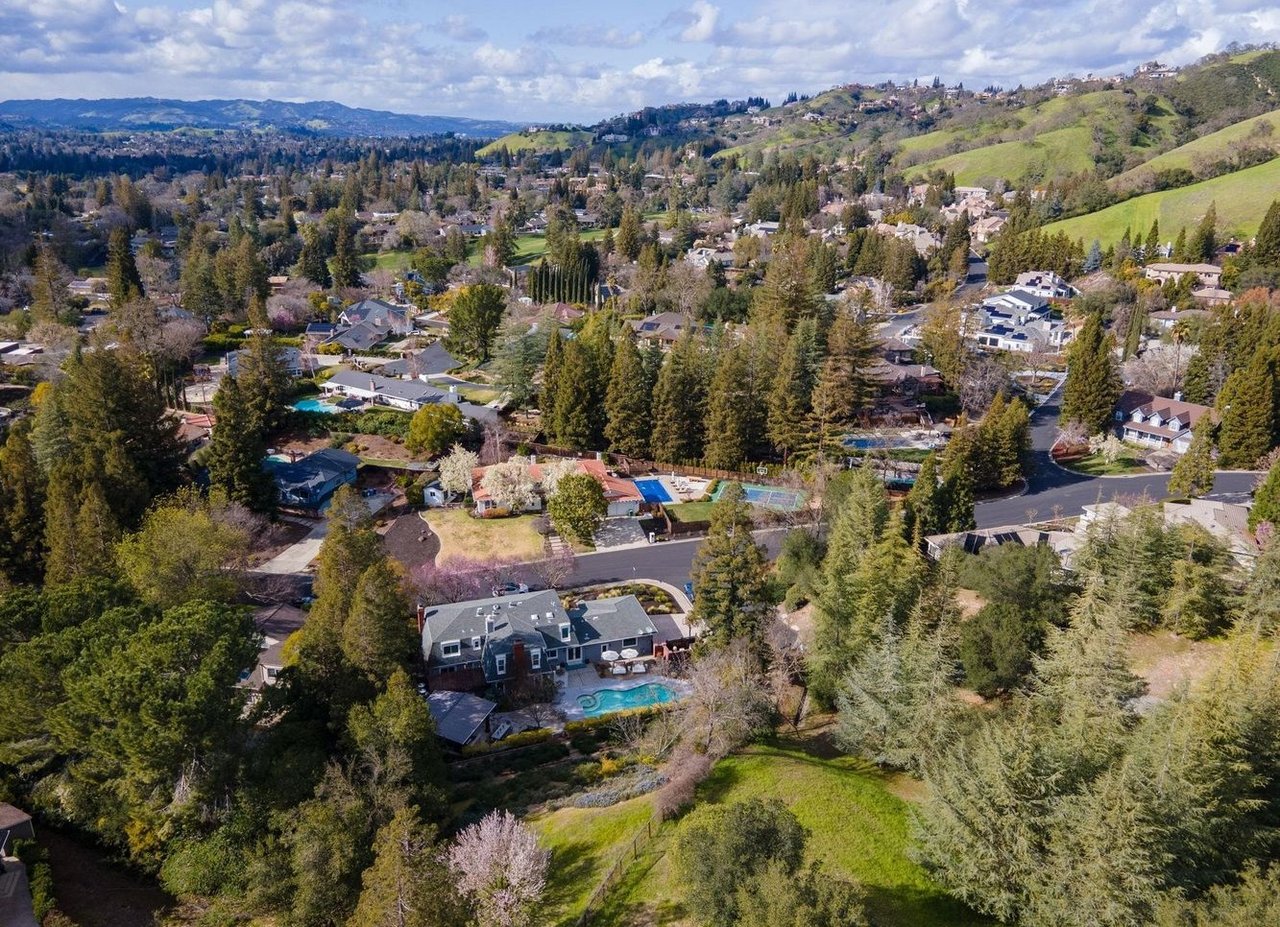
Westside Alamo is consistently the most searched and most broadly desirable part of Alamo because it offers something the more remote estate pockets don't: proximity. Mature lots, established homes, quiet residential streets, and the lifestyle appeal of Alamo's privacy all within easy reach of Danville's restaurants, shops, trail access, and community energy.
For buyers coming from more urban markets, Westside Alamo often represents the clearest version of "the best of both worlds": more private and residential than downtown Danville, but more accessible than deeper Alamo estate pockets.
What buyers consistently value here: Mature trees and landscaping that took decades to develop, larger-feeling lots that create genuine separation between homes, custom-home character and architectural variety that newer planned communities can't replicate, proximity to Danville that makes the trade-off between privacy and convenience feel minimal, and long-term resale recognition. Westside Alamo is a searchable, known quantity for buyers who will eventually want what you have.
What to scrutinize before buying: Westside Alamo homes vary significantly by age and update quality. Roof age and documentation, drainage (especially for properties with slope or mature trees that affect water movement), pest and dry rot exposure in a dense mature-landscape environment, window condition, HVAC, remodel permit history, sewer or septic details at the specific address, lot usability including driveway access and grade, tree maintenance costs, insurance, and privacy from neighboring homes all require evaluation. The combination of strong location and potentially older construction means due diligence matters more here than in newer markets.
Seller strategy: Don't market a Westside Alamo home generically. The strongest value stories lead with location and access to Danville, then the lot and its privacy, then outdoor living quality, then remodel quality and documentation. Westside Alamo buyers want to feel the lifestyle immediately; staging, photography, and copy should communicate "established, private, and close to everything" before they finish scrolling the listing.
2. Roundhill: Country-Club Identity and Established Luxury
Best fit for: Buyers who want a classic East Bay country-club setting, golf-course adjacency, larger homes, and a neighborhood identity built around a specific lifestyle anchor.
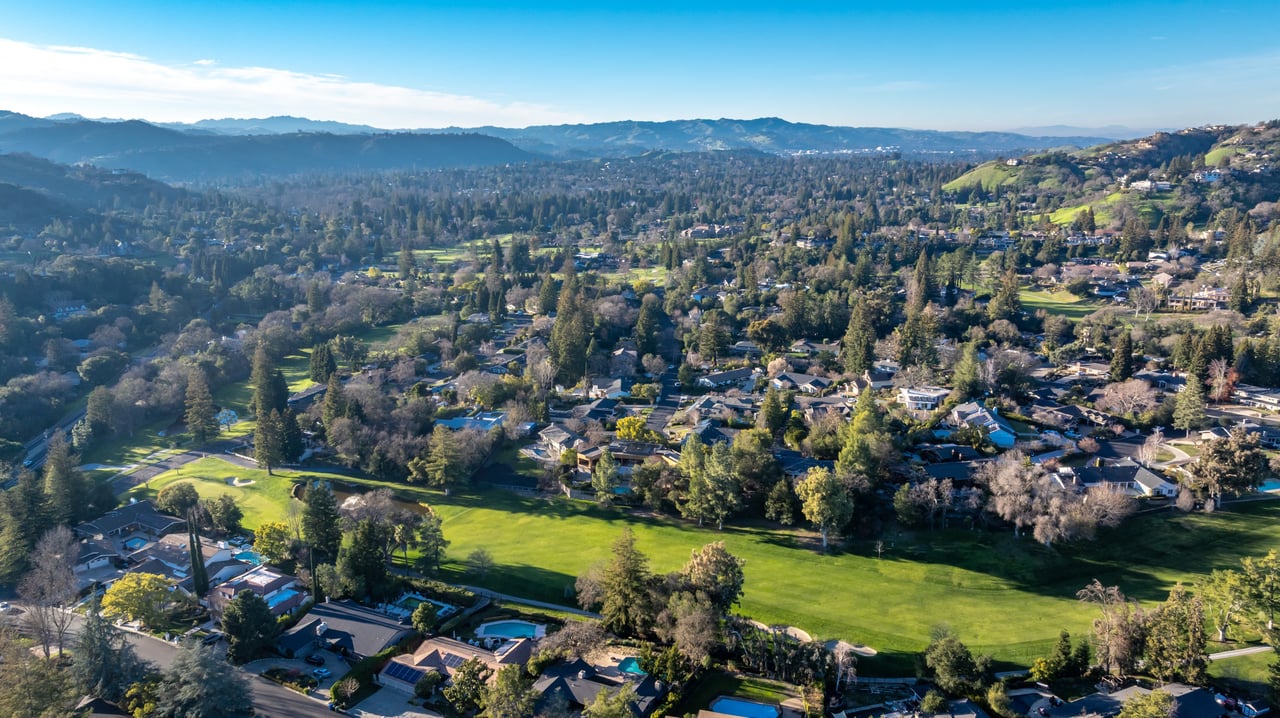
Roundhill's identity is inseparable from Round Hill Country Club, one of the area's defining lifestyle institutions. Buyers who choose Roundhill are often specifically choosing the country-club environment, the golf-course setting, the community identity, and the formal neighborhood feel as much as they're choosing a specific home.
In 2026, Redfin shows Roundhill Country Club with a median sale price around $2.6M, slightly below Westside Alamo's median. That difference reflects both the specific buyer pool and the condition sensitivity of homes in a community where buyers have elevated expectations that must be met.
What buyers consistently value here: a golf-course setting and the visual drama it provides; larger homes with formal layouts that suit entertaining; an established neighborhood identity that signals arrival and prestige; mature landscaping on curated streets; and proximity to both Alamo and Danville conveniences while maintaining a distinctly elevated community feel.
What to scrutinize before buying: Golf-course adjacency requires careful evaluation of ball exposure depending on which hole the property backs, cart path proximity and associated noise, privacy profiles that vary dramatically between fairway-facing and interior-facing properties, and whether the specific view from primary living areas is genuinely premium or requires standing in a specific corner of the yard. Review club membership details if the property includes or requires membership. Evaluate roofs and systems on homes that may be showing their age; pool and spa equipment condition and age; outdoor-living quality relative to the asking price; and landscaping maintenance level.
Seller strategy: Roundhill sellers must lead with setting and lifestyle specificity. Does this home have genuine golf-course views, and from which rooms? Is there privacy despite the golf-course adjacency? Is the outdoor living strong enough to justify the price? Is the interior updated to match the community's luxury positioning? Buyers comparing Roundhill to Blackhawk, The Bridges, or other East Bay golf-course communities are asking these questions specifically. Generic luxury marketing without specific answers loses to sellers who answer them.
3. Stonegate: Established Residential Privacy Without the Club Identity
Best fit for: Buyers who want established Alamo luxury, estate-style homes, and residential privacy without necessarily prioritizing country-club or golf-course orientation.
Stonegate sits within a broader cluster of established Alamo and nearby residential pockets alongside Roundhill Country Club, Rudgear Estates, Joaquin Ranch, and Rudgear Meadows, and appeals to buyers who want high-end residential privacy in a central Alamo location without the specific lifestyle overlay of a golf-course community.
The buyer who chooses Stonegate over Roundhill often has a clear reason: they want Alamo's estate-scale living on their own terms, with access to central Alamo conveniences, without HOA constraints or club-adjacent considerations.
What buyers consistently value here: Larger properties with genuine separation from neighboring homes, quiet streets with mature landscaping that creates a settled, established feel, custom-home character that resists the uniformity of newer planned communities, proximity to central Alamo without the remoteness of deeper estate pockets, and strong long-term resale recognition among buyers who specifically search for Alamo residential luxury.
What to scrutinize before buying: Lot usability is the critical variable. Stonegate lots vary, and what looks spacious in a listing can feel slope-limited in person. Evaluate drainage at and around the foundation, driveway approach and grade, outdoor entertaining zones and their usability, landscaping maintenance and irrigation, pool and spa systems, roof and major system condition, remodel quality and permit history, and insurance considerations. In Alamo, the lot quality often matters more than the home's interior; choose accordingly.
Seller strategy: Stonegate sellers should make privacy, lot quality, and outdoor living immediately obvious in marketing; these are the features that distinguish Stonegate from other Alamo pockets and neighboring areas. If the home has a strong setting, professional photography should capture it from the key living spaces that buyers will inhabit daily, not just from exterior vantage points.
4. Bryan Ranch: Stone Valley-Area Residential Variety
Best fit for: Buyers who want established Alamo residential character in the Stone Valley Road area, with larger-lot potential and access to central Alamo routes, Danville, and local amenities.
Bryan Ranch is part of the established Stone Valley Road-area group of Alamo neighborhoods, and it's important to understand from the start: homes vary considerably within this pocket. Unlike Westside Alamo or Roundhill, which have more consistent identities, Bryan Ranch can include properties across a meaningful range of size, condition, and update level. Buyers should evaluate each property individually rather than relying on a neighborhood-wide assumption about value.
What buyers consistently value here: Larger-lot possibilities that create room for outdoor living, pool areas, gardens, and sport courts; mature trees and established landscaping; access to Stone Valley Road-area schools and amenities; a quieter residential feel with custom-home variety; and remodel potential in properties that haven't yet been updated to current expectations.
What to scrutinize before buying: Because homes vary significantly, standard due diligence items matter more here: roof age and condition, drainage and lot grading, pest and dry rot in a mature-landscape setting, remodel permit history, pool and spa condition, driveway and parking, insurance, slope and retaining wall condition, and how the specific home's resale comparable set is defined. One Bryan Ranch property's value doesn't predict another's; the evaluation must be property-specific to the property's strategy: Bryan Ranch sellers must be precise. Marketing that explains why this lot works, what has been updated, how the outdoor space functions, what the privacy actually delivers, what maintenance records exist, and what makes this property different from other Alamo options will outperform generic "Alamo estate" positioning every time. Buyers comparing Bryan Ranch to Westside Alamo and Stonegate need specific answers to decide.
5. White Gate: Distinctive Properties and Semi-Rural Character
Best fit for: Buyers who want larger lots, distinctive custom homes, semi-rural character, and a more individualistic lifestyle than any neighborhood-defined Alamo pocket provides.
White Gate is not for everyone, and that's part of its appeal. It attracts buyers who want something with genuine individuality: more acreage, more separation, more custom character, and more flexibility for the lifestyle elements that standard residential lots don't accommodate horses, significant gardens, extensive outdoor structures, or simply the feeling of space that no standard suburban property can deliver.
What buyers consistently value here: Larger lots that accommodate outdoor living at scale, custom home character that resists comparison to any standard neighborhood, privacy that comes from genuine separation rather than landscaping screening, potential for guest houses or ADUs depending on the specific property, and a distinctiveness that appeals to buyers who have intentionally ruled out conventional neighborhoods.
What to scrutinize before buying: Larger, more unique properties require deeper due diligence—septic versus sewer at the specific address. Alamo's unincorporated character means this varies. Well versus municipal water if applicable. Drainage across a larger lot and the maintenance it requires. Slope, fencing, gates, and driveway access for both daily use and emergency vehicle access. Insurance availability and premium for a larger or more remote property. Outbuildings and ADU legality. Tree maintenance costs at scale. Permit history for any additions or modifications. The charm of a distinctive property can mask logistics that become expensive or frustrating to live with.
Seller strategy: White Gate sellers must market the property's utility and lifestyle potential as much as the home itself. What does this lot make possible that standard Alamo residential lots don't? Privacy, acreage, outdoor living at scale, guest space, gardens, flexibility these are the selling propositions that distinguish White Gate from every other Alamo neighborhood. Professional video that shows the property's scale and setting is especially important here because photos alone often can't communicate what makes the property special.
6. Alamo Highlands and Hillside Pockets: Views, Elevation, and Dramatic Setting
Best fit for: Buyers who specifically want hillside living, elevated views, and a dramatic setting, nd who are prepared to evaluate and maintain what hillside property ownership requires.
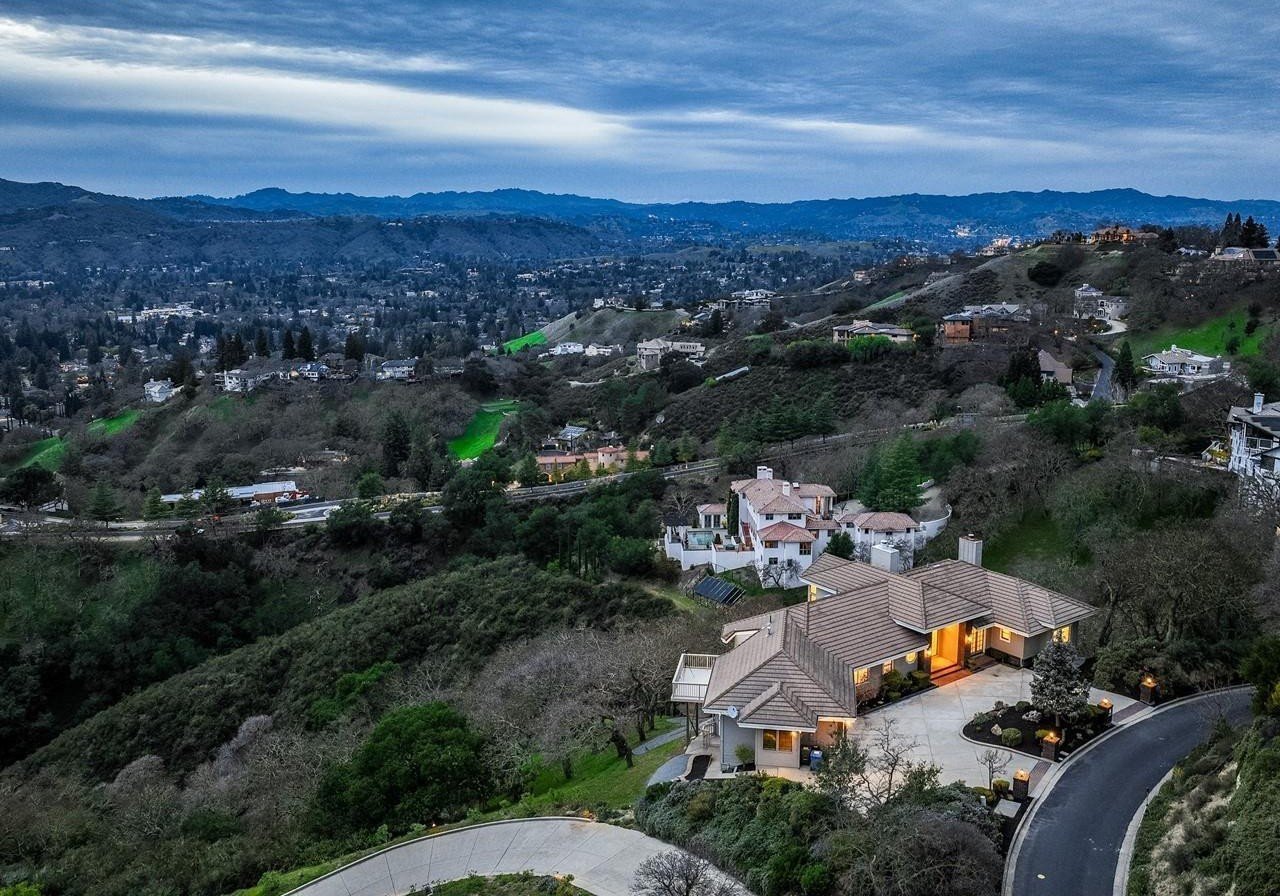
Alamo's hillside and elevated pockets offer something no flat-terrain property can replicate: genuine views and a sense of dramatic setting that creates a different daily-life experience. For buyers who specifically want to wake up to a view, have outdoor living that overlooks something, and live with the physical sense of elevation and separation, these properties deliver that in ways that exceed anything in neighboring markets.
What buyers consistently value here: Protected or long-range views from primary living spaces, hillside privacy that comes from elevation rather than just screening, custom architecture that takes advantage of the setting, larger lots with outdoor living designed around the view, and the emotional distinctiveness of living in a setting that most buyers can't find anywhere else in the East Bay.
What to scrutinize before buying: Hillside properties require the most thorough due diligence of any Alamo property type. Slope and drainage are the foundation; water moving incorrectly on a hillside property can affect foundations, retaining walls, and landscape stability in ways that compound over time. Retaining wall condition and engineering history. Driveway grade for daily use, guest parking, and emergency vehicle access. Insurance availability and premium in what may be a wildfire-risk zone. Erosion potential on unprotected slopes. Outdoor usability versus outdoor acreage: a dramatic view lot can have very limited flat usable space. Tree work at scale and the access challenges it creates. Foundation or settlement concerns. Emergency access routes.
Seller strategy: Hillside sellers must photograph and video the view from the rooms where buyers will experience it daily: the kitchen, living areas, primary suite, and outdoor living spaces. Don't make buyers discover the view for themselves. Make it the first thing they understand about the property. Alongside the setting strengths, proactively address the due-diligence concerns: drainage improvements with documentation, retaining wall records and condition, insurance clarity, and maintenance history all reduce the buyer hesitation that hillside properties inevitably generate.
The Decision Framework: Which Alamo Neighborhood Fits You?
Choose Westside Alamo if: Charm, mature lots, proximity to Danville, established character, and daily convenience matter more than maximum seclusion or country-club identity.
Choose Roundhill if: A golf-course setting, country-club lifestyle, larger homes, and a formal neighborhood identity built around a specific lifestyle anchor are central to your vision for the next chapter.
Choose Stonegate if: Estate-scale residential privacy, quiet established streets, mature landscaping, and central Alamo access matter without requiring country-club orientation or semi-rural isolation.
Choose Bryan Ranch if: Stone Valley-area residential character, larger-lot potential, mature trees, and custom-home variety fit your lifestyle and you're prepared to evaluate each specific property rather than relying on neighborhood-level assumptions.
Choose White Gate if: Distinctive custom properties, larger lots, semi-rural character, and the individuality that no neighborhood-defined Alamo pocket provides are what you're specifically looking for.
Choose hillside or Alamo Highlands pockets if: Views, elevation, a dramatic setting, and the daily-life experience of hillside living are worth the additional due diligence and maintenance hillside properties require.
The School Question: Verify Before You Commit
San Ramon Valley Unified School District serves all Alamo neighborhoods. SRVUSD lists Alamo-area schools including Alamo Elementary, Rancho Romero Elementary, Stone Valley Middle, and Monte Vista High among its district schools. The district is consistently ranked among the strongest in Contra Costa County.
The critical caveat: school assignment is address-specific, not neighborhood-specific. Boundaries can vary street by street and change over time. Never rely on listing remarks or neighborhood reputation for school assignment. Verify the specific address directly with SRVUSD before making any decisions based on school access.
San Ramon Valley Unified School District →
What Sellers in Every Alamo Neighborhood Need to Know
The Alamo address creates interest. Your specific home, lot, condition, privacy, outdoor living, and price create the offer. Generic "Alamo estate" marketing loses to sellers who answer the specific questions luxury buyers are asking.
Before listing in any Alamo pocket, your marketing strategy should answer: why this home, in this specific pocket, at this price? What makes the lot work? What does the privacy actually deliver? What has been updated and when? What does the outdoor living make possible? What does the maintenance history say about how this home has been cared for?
Sellers who answer these questions through staging, photography, disclosures, and marketing copy that communicates lifestyle rather than listing features consistently outperform sellers who rely on the Alamo address alone.
Our Ease of Sell program can fund targeted pre-listing preparation, landscaping, staging, repairs, and photography, with no payment due until closing.
Get a free Alamo home valuation →
Learn about our seller process →
FAQ
What is the best neighborhood in Alamo?
There's no universal answer. Westside Alamo, Roundhill, Stonegate, Bryan Ranch, White Gate, and hillside pockets each offer distinct advantages depending on lifestyle priorities, budget, lot preferences, privacy needs, commute, and resale goals.
Is Westside Alamo the most desirable neighborhood?
It's consistently among the most searched and broadly desirable because it offers mature lots, established character, and proximity to Danville, making it the strongest "best of both worlds" option for buyers who want Alamo's privacy without maximum remoteness.
What is Roundhill known for in Alamo?
Roundhill is known for its connection to Round Hill Country Club and the golf-course, country-club lifestyle that comes with it. Buyers often choose it for that community identity, along with larger homes and established luxury appeal.
Is Stonegate a good neighborhood in Alamo?
Stonegate can be an excellent fit for buyers seeking established residential luxury, estate-style homes, and genuine privacy without country-club orientation. As with any Alamo pocket, the specific lot, condition, and price matter heavily.
What should buyers know about Bryan Ranch?
Bryan Ranch homes vary considerably; buyers should evaluate each property individually rather than assuming neighborhood-wide consistency. Due diligence on condition, drainage, slope, permits, and lot usability matters more here than in more uniform neighborhoods.
Are Alamo homes good for resale?
Alamo has strong long-term resale fundamentals: privacy, larger lots, mature neighborhoods, and East Bay luxury positioning create consistent buyer demand. Resale depends on the specific neighborhood, lot, condition, updates, outdoor living, school assignment, disclosures, and pricing at the time of sale.
Trying to decide which Alamo neighborhood fits your life?
The Frazzano Tse Team will compare Westside, Roundhill, Stonegate, Bryan Ranch, White Gate, and other Alamo pockets based on your lifestyle, budget, commute, lot preferences, privacy priorities, and resale goals before you start touring.
Browse Alamo listings →
Talk to us about buying →
Get a free home valuation →
Contact us directly →