Who this is for: San Ramon homeowners preparing to list who are trying to figure out what Staging actually is, whether it's worth doing, and how to approach it strategically rather than just bringing in furniture and calling it done. This guide is also for sellers who have heard conflicting advice "stage everything," "your own furniture is fine," "vacant homes don't need staging" and want a clear, honest framework for making the decision.
The decision you're trying to make Isn't "should I stage"; in most cases, at San Ramon's $1.5M–$2M+ price point, you should. The real decision is what kind of Staging, which rooms, and in what sequence so that your preparation budget is spent where it changes buyer behavior rather than where it just looks nice. Staging that improves photos and clarifies floor plans produces results. Staging that's applied without strategy produces a pretty home that still sits.
Why our team has authority: The Frazzano Tse Team is the #1 Compass Concierge Team for 2020–2025 with $2.7 billion in career sales across San Ramon, Danville, and the Diablo Valley. We've coordinated Staging for hundreds of listings across Gale Ranch, Windemere, Dougherty Valley, Twin Creeks, The Bridges, Canyon Lakes, and every other San Ramon neighborhood, and we know which staging decisions change outcomes and which ones make sellers feel better about their preparation.
What you'll know by the end: The specific difference between decorating and strategic Staging, the 10 staging moves that consistently move San Ramon buyers, how staging priorities differ by neighborhood and property type, what Staging cannot fix, when it's most and least worth the investment, and how to think about ROI beyond "did the price go up."
The Core Distinction: Decorating vs. Staging
Decorating is personal. Staging is strategic. These look similar in execution; both involve furniture, accessories, and presentation decisions, but they serve completely different goals.
Decorating shows buyers how you live. Staging helps buyers see how they could live. The moment a home starts feeling like someone else's personal space too many family photos, collections that reflect the seller's interests, furniture scaled for the seller's lifestyle buyers mentally step back. They stop imagining themselves in the home and start feeling like guests in yours.
San Ramon buyers make decisions fast. They study photos before scheduling tours, compare multiple homes in the same weekend, and develop strong first impressions before they've seen anything in person. Good Staging makes your home feel like the clearest, most move-in-ready option in its price range. Bad Staging: No staging makes a genuinely good home feel smaller, darker, more dated, or harder to understand than it actually is.
Staging Starts Before Furniture Arrives
Most sellers think Staging means bringing in furniture or rearranging what they have. That's the second step. The first step is editing and preparation, and it's where most of the value comes from.
Before any furniture decision matters, address:
- Clutter throughout the home, including in closets, garage, and storage areas buyers will open
- Lighting: bulb temperatures, fixture condition, window coverings blocking natural light
- Paint: fresh neutral paint changes how every subsequent staging decision photographs
- Flooring condition: worn carpet or scratched hardwood undermines Staging regardless of furniture quality
- Furniture: scale oversized pieces make good rooms feel small; removing them costs nothing
- Personal items: family photos, collections, religious items, anything that anchors the space to your life rather than opening it to the buyer's imagination
- Odors: this is the one buyers notice before they see anything
- Landscaping: curb appeal and backyard condition affect buyer psychology before they enter
Staging applied to a home with dirty windows, worn carpet, heavy furniture, and dated lighting underperforms every time. Staging works when the home is already clean, bright, and edited. Everything else is layering on top of a weak foundation.
The 10 Staging Moves That Consistently Move San Ramon Buyers
1. Make the Entry Feel Calm and Valuable
Buyers form their first impression within seconds of crossing the threshold. A strong entry should feel clean, uncluttered, bright, and proportional, welcoming without being overdone. Remove shoes, extra furniture, heavy entry tables, and anything that makes the space feel tight. If the entry is small, keep it simple and let it breathe. If it's a grand entry, don't compete with it by adding more.
The entry sets the emotional tone for everything that follows. Don't underinvest in this moment.
2. Stage the Kitchen Like the Center of Daily Life
In San Ramon, the kitchen is often where buyers make their emotional decision about the home. They want to imagine school mornings, casual dinners, coffee at the island, hosting friends. The kitchen should feel open, functional, and easy to inhabit.
Before photography: clear every counter surface, remove small appliances, clean all cabinet fronts and fixtures thoroughly, remove everything from the refrigerator face, add only minimal intentional styling, ensure lighting is at full strength. Clean and spacious consistently outperforms cute. The goal is "I could cook here tonight," not "this looks like a magazine."
3. Show the Family Room as the Everyday Gathering Space
Many San Ramon buyers specifically want a strong connection between the kitchen and family room, and an awkward or poorly staged family room can make buyers question the floor plan even when it is actually fine. Staging should show a clear TV or media wall, a conversation area with correct furniture scale, easy traffic flow between the kitchen and the family room, and, if applicable, a connection to the backyard.
The most common mistake: furniture that's too large. An oversized sectional can make a generous family room feel tight, and buyers respond to that feeling even when they can't articulate why. Scale matters more than style in this room.
4. Give Every Flex Space a Clear Purpose
San Ramon buyers care deeply about flexibility: home offices, guest spaces, homework areas, fitness rooms. A spare room, loft, or bonus space without a clear function becomes a visual question mark that weakens the home's perceived value.
Assign a clear job to every ambiguous space. Stage it to perform that function visibly. Don't leave buyers asking "what would we do with this? Because confusion turns into skepticism, and skepticism turns into lower offers or hesitation.
5. Make the Primary Suite Feel Like a Retreat
The primary bedroom should feel calm, spacious, and balanced, not overdesigned or crowded. Remove exercise equipment, extra chairs, visible cords, laundry, and anything that breaks the retreat feeling. Use furniture scaled to the room so the space feels generous. Keep nightstands minimal. Neutral, high-quality bedding photographs better than anything elaborate.
If the primary suite feels cramped, buyers begin to question the home's livability at a fundamental level, and that concern cascades into their evaluation of everything else.
6. Make Bathrooms Feel Clean and Finished
Bathrooms don't need heavy styling. They need to feel spotless, bright, and simple. Clear every counter surface, remove all personal products, replace tired towels, clean grout lines thoroughly, polish mirrors, improve vanity lighting if it's dated or dim, remove bath mats for photography, and clean the shower glass until it photographs clearly rather than hazily.
A dated bathroom can still show well when it's immaculate and simple. A dirty or cluttered bathroom is one of the fastest buyer turnoffs in San Ramon's $1.5M+ market; buyers at this price point notice, and they remember.
7. Make Outdoor Space Tell a Story
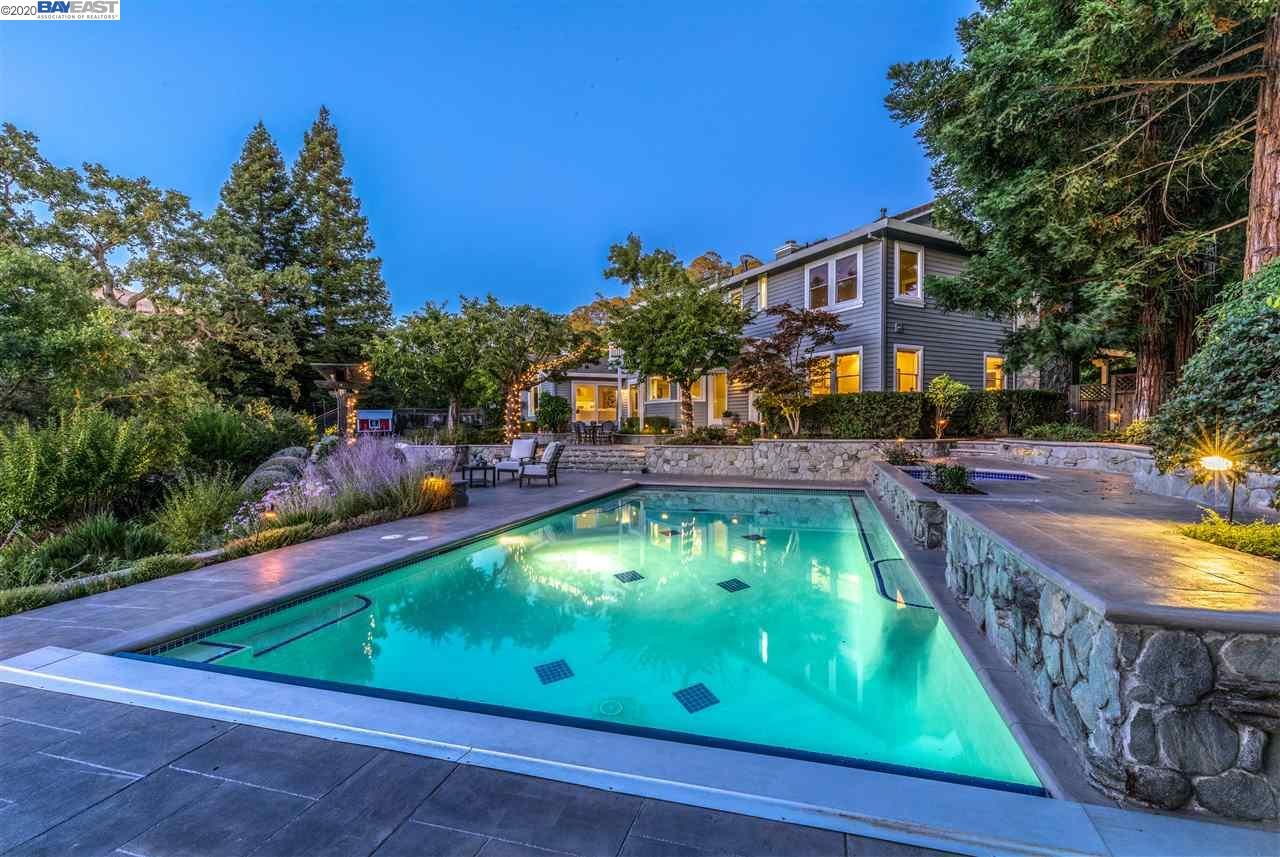
San Ramon buyers care about outdoor living; it's a core part of what they're paying for in this market. A backyard should communicate a clear lifestyle: dining, entertaining, relaxed lounging, kids' play, pool use, or low-maintenance living. Buyers who have to figure out what the yard is for tend to categorize it as a project rather than a feature.
Even small outdoor areas respond to staging: staging with appropriate cushions, a dining table if the space supports it, potted plants in good condition, clean hardscape, trimmed landscaping, and defined zones. Outdoor staging matters particularly in Windemere, Gale Ranch, Dougherty Valley, The Bridges, and Canyon Lakes, where yard use, views, privacy, or outdoor living is part of the pricing story.
8. Make Storage Look Generous
Buyers open closets. They look inside pantries, cabinets, and garages. If storage areas are packed, which is true of most occupied homes at listing time, buyers assume the home lacks storage, regardless of how much storage actually exists.
Before listing, remove 30–50% of closet contents and organize what remains neatly. Clear garage walkways and remove anything that makes the garage feel like a warehouse. Organize pantry shelves so they read as abundant rather than crowded. A closet that's two-thirds full reads as spacious. A full closet reads as insufficient.
9. Use Lighting Aggressively
Lighting is the single staging variable that most dramatically affects photos, and photos determine how many buyers schedule showings. Before photography, open every blind, remove any heavy drapes that block natural light, clean all windows inside and out, replace any burned-out bulbs, ensure a consistent warm bulb temperature throughout the home, turn on every lamp, and check that exterior lights function correctly.
Mixed bulb temperatures make rooms look strange in photos. Dark rooms make buyers assume a home is outdated or poorly maintained. Bright, warm, consistent lighting creates the sense of openness and care that translates into showing appointments.
10. Stage for Photos First, Showings Second
The first showing for most San Ramon buyers happens online on their phone, while sitting on the couch, comparing your listing against three others on the same search. If the photos don't communicate value immediately, many buyers never schedule an in-person visit.
Before photography, ask of every room: does it read clearly in a single wide-angle frame? Is furniture blocking sightlines toward the best features? Is the room bright? Is there a clear focal point? Are counters too busy? Does the backyard look livable? Does the home feel current? Optimize for photos first. The in-person showing experience follows from there.
Vacant Homes vs. Occupied Homes — Different Problems, Different Solutions
Vacant homes need staging because rooms feel smaller, colder, and harder to understand. Buyers struggle with scale: is that room big enough for a king bed? Does a dining table fit? What's the traffic flow? Staging answers these questions before they become hesitation. For vacant homes, prioritize: living room, kitchen and dining, family room, primary bedroom, home office or flex space, and outdoor areas. You don't need to stage every bedroom; stage the rooms that sell the home.
Occupied homes need editing more than staging. The staging isn't to remove everything; it's to make the home feel less personal, more spacious, and easier for buyers to imagine as their own. Reduce furniture, remove personal photos and collections, clear all counter surfaces, organize closets and remove excess items, improve lighting, neutralize bedding, clean windows, and remove pet items and accessories. Occupied staging is ordered emotionally because sellers are living there, but it's just as important as furniture staging for vacant homes.
How Staging Priorities Differ by San Ramon Neighborhood
Gale Ranch and Windemere: Buyers are comparing similar newer homes side by side. Small differences in how polished a home feels determine which one gets the offer. Clean finishes, bright kitchen and family room flow, backyard usability, and work-from-home space all need to be communicated immediately in photos. If the home has a view or a private lot, don't let that feature be hidden by poor furniture placement.
Dougherty Valley: Buyers compare multiple newer homes with similar floor plans. Staging needs to make the home feel more refined than the competition: light, flow, clean lines, modern-but-warm styling, and a backyard with clear purpose. A home that looks slightly more polished online generates more showing appointments, and more showings produce better offers.
Twin Creeks and Central San Ramon: Established homes need staging that is " well maintained and current" rather than "dated." The goal is to help buyers think "established and cared for" rather than "old and tired." Removing dated furniture, brightening older rooms, and creating a clean maintenance story through both staging documentation are equally important here.
Canyon Lakes: The lake or golf-course setting is the primary differentiator; staging should make the connection between interior living and the scenic setting as clear as possible. For condos and townhomes, staging should make spaces feel efficient and elevated rather than cramped. Patio or balcony staging is particularly important; it's often what justifies the HOA cost in a buyer's mind.
The Bridges: Luxury buyers expect a higher standard, one that matches the community's premium positioning. Scale, polish, outdoor living presentation, a strong primary suite, dining and entertaining, staging, and pool and patio presentation all matter at this price point. Weak stagStaging$2M+ feels noticeably out of place and can suppress buyer enthusiasm even when the home's bones are strong.
What Staging Cannot Fix: Staging is powerful, but it works only when the underlying fundamentals are sound. Staging cannot substitute for:
Correct pricing: staging increases showing activity, but it won't make buyers write offers above what the market supports for the home's condition and location.
Significant deferred maintenance: buyers are more selective in 2026, and inspectors will find what stagStagingceals. Discovery during escrow is always more expensive than upfront disclosure.
Poor floor plan or location: staging can clarify a confusing layout, but it can't restructure a home or move it closer to desired amenities.
Bad photos: Staging isn't captured well in photography, and it doesn't produce its intended return. Professional photography is not optional.
Strong odors: the one thing that immediately breaks buyer confidence before they've seen a single room.
Be realistic about what staging is being asked. If the home has significant issues, the right sequence is: address the issues, then stage. Our Ease of Sell program funds both the preparation and the staging coordination, with no payment due until closing, which lets sellers do both correctly without front-loading the cost.
How to Think About Staging ROI
Sellers often ask whether staging pays for itself in a higher sale price. That's too narrow a frame. The better questions: will staging improve listing photos and increase showing activity? Will it help buyers understand the floor plan faster and reduce hesitation? Will it reduce inspection objections from buyers who are less emotionally committed? Will it support the list price by making the home feel move-in ready rather than a project?
Staging ROI shows up as faster offer activity, cleaner offer terms, less time on market, fewer inspection concessions, and stronger buyer confidence, not only as a higher sale price. In San Ramon's 2026 market, where hot homes sell in about 8 days and average homes sit for 14–52 days depending on the neighborhood, the difference between those outcomes is often preparation and presentation quality. Staging is a meaningful part of what separates them.
Read our full pre-sale preparation guide →
See how Ease of Sell funds staging coordination →
FAQ
Is staging worth it when selling in San Ramon?
In most cases at San Ramon's $1.5M–$2M+ price point, yes. Staging improves listing photos, helps buyers understand the floor plan, creates stronger emotional engagement, and supports the list price by making the home feel move-in ready. The return shows up in showing activity, offer quality, and time on market, not only in final price.
Do I need to stage every room?
No. Focus on the rooms that sell the home: entry, main living areas, kitchen and dining, family room, primary suite, office or flex space, and outdoor areas. Secondary bedrooms matter less unless they're being presented as a specific selling point.
Is staging more important for vacant homes?
Yes. Vacant homes feel smaller, colder, and harder to understand. Staging answers the scale and flow questions that empty rooms leave unresolved, and it creates the emotional engagement that a space cannot.
Can I use my own furniture?
Yes, if it fits the home, reads as current, and photographs well. Most occupied homes need editing and rearranging more than full staging. The goal is to remove what makes the home feel personal and leave what makes it feel spacious.
What should I remove before listing?
Clutter, excess furniture, personal photos, pet items, counter appliances and accessories, oversized rugs, heavy window coverings, collections, and anything that anchors the space to your life rather than opening it to the buyer's imagination.
What's the biggest staging mistake San Ramon sellers make?
Keeping too much furniture. Crowded rooms look smaller in person and worse in photos. Most sellers need to remove 20–40% of their furniture before listing, not add anything.
Wondering what staging strategy would make your San Ramon home show at its strongest?
As the #1 Compass Concierge Team for 2020–2025, the Frazzano Tse Team will identify what to edit, what to stage, what to skip, and how to make your home photograph and show at its competitive best.
Request your free Pre-Sale Staging Review →
Learn about our staging approach →
See how Ease of Sell funds staging preparation →
Talk to us directly →